



To tell the story of Naples through its art and culture means exploring a city that has played a leading role in every major era of Mediterranean history. Here, different periods have never erased one another; instead, they have layered upon each other, creating a unique heritage shaped by continuity, contrasts, and deep historical stratifications.
Among the city’s major museum institutions stands the Museo e Real Bosco di Capodimonte, housed in the former Bourbon royal palace commissioned by Charles of Bourbon. Its collections reflect the cultural ambition of eighteenth-century Naples, a city capable of engaging in dialogue with the great European courts. Inside, masterpieces by Titian, Caravaggio, and Raphael coexist with an extraordinary collection of Neapolitan painting, offering insight into the city’s artistic evolution across the centuries.
The journey into ancient history continues at the Museo Archeologico Nazionale di Napoli, one of the most important archaeological museums in the world. The collections from Pompeii, Herculaneum, and Stabiae provide a vivid picture of daily life, aesthetic taste, and intellectual thought in the Greek and Roman world.
In the heart of the historic center lies the Cappella Sansevero, a space that brings together art, science, and spirituality. The Veiled Christ represents one of the absolute masterpieces of eighteenth-century European sculpture, capable of conveying emotion and wonder through an extraordinary level of technical perfection.
The Duomo di Napoli, on the other hand, tells the story of the city’s deep connection with its religious dimension. The cathedral preserves centuries of history, works of art, and the Treasury of San Gennaro, the result of popular devotion and the collective participation of Neapolitans over time.
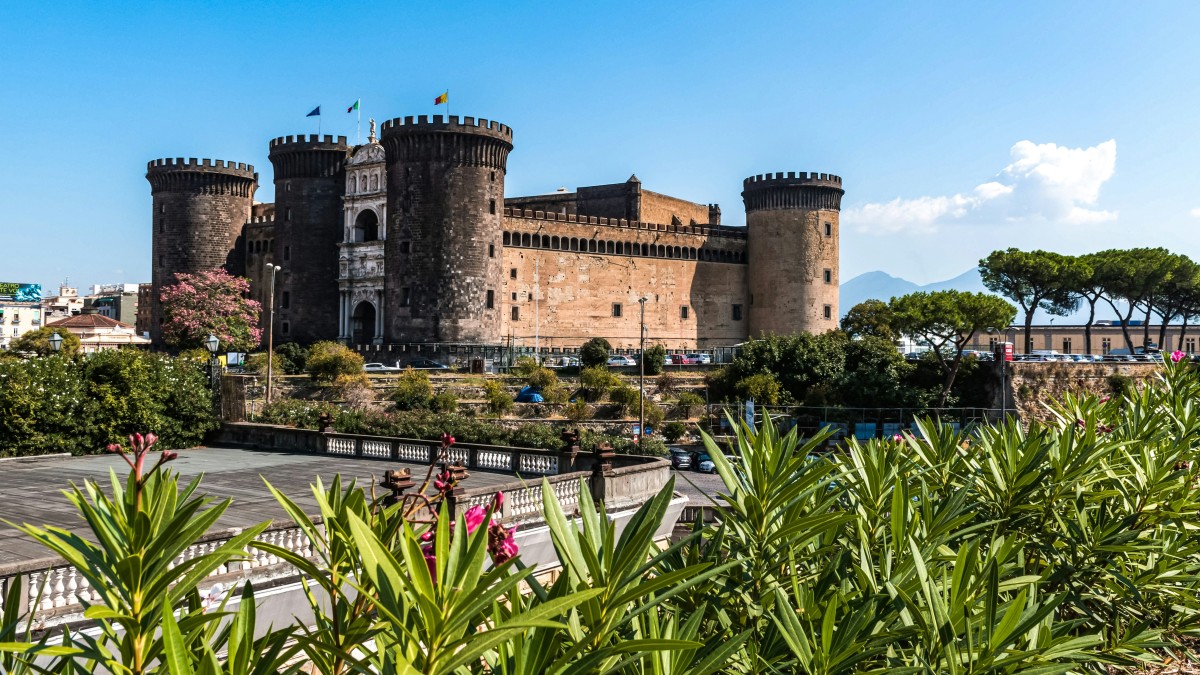
Overlooking the harbor, the Maschio Angioino stands as a testament to the great political and cultural eras that placed Naples at the center of the European stage. Its halls and walls recount the passage of dynasties, artists, and intellectuals who helped shape the city’s urban identity.
More intimate and closely tied to the sea, Castel dell’Ovo preserves a suspended atmosphere where history and landscape blend together. From here, one can fully understand the profound relationship between the city and its gulf—an enduring element in Neapolitan life and imagination.
The Naples of today engages in dialogue with its past through the Museo Madre, which presents modern artistic languages within the ancient fabric of the historic center, demonstrating how the city remains fertile ground for creativity.
The city’s theatrical tradition finds its highest expression in the Teatro di San Carlo, the oldest continuously active opera house in the world. Its history is intertwined with that of European music and with Naples’ central role in the development of opera.
Beneath the city’s streets lies a less visible yet equally fascinating heritage: Napoli Sotterranea. This underground path allows visitors to descend into the city’s depths and understand its ingenuity, adaptability, and continuous habitation over millennia.
Naples preserves its art in museums, architecture, places of worship, and theaters, but also in collective memory and everyday life. To explore these spaces means to understand a city that has always transformed its history into living culture, leaving a profound mark on those who experience it with attention and respect.